
The ADHD Laundry Guide: Functional Strategies for the Most Boring Chore on Earth
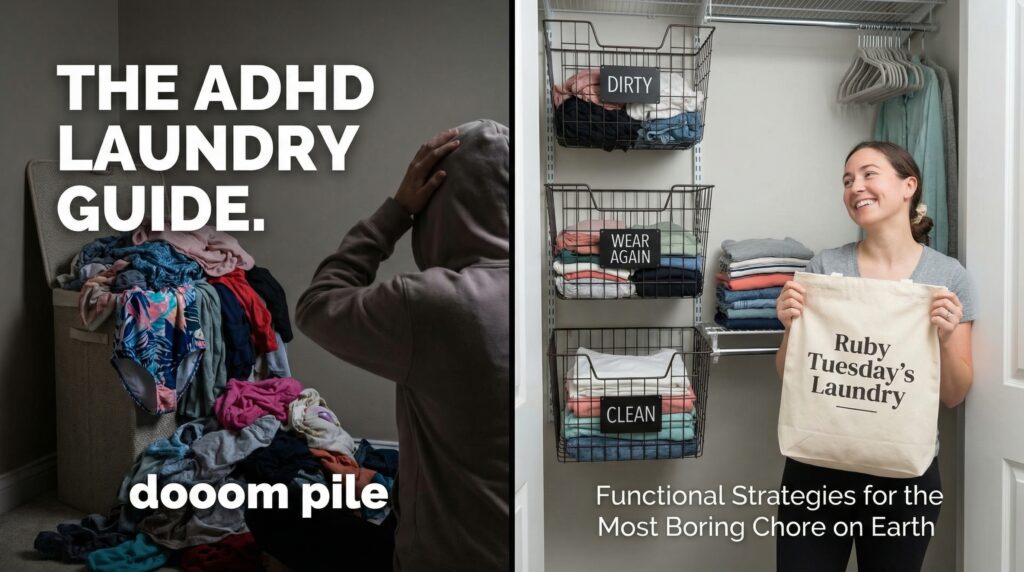
There is a pile of clothes in the corner of your room.
It has been there since last Tuesday. Or maybe two Tuesdays ago. Honestly, you have lost track, and looking at it directly causes physical pain. It feels like an insurmountable mountain of fabric.
You are wearing a swimsuit as underwear today because you missed the window to switch the washer to the dryer, and now the wet clothes smell like a wet dog, and the thought of re-washing them requires more dopamine than your brain has produced in a decade.
If you have ADHD, laundry is so much more than a chore.
It’s boring. It’s repetitive. It has too many steps. It requires working memory, time management, and task initiation, literally all the things your brain struggles with.
At Ruby Tuesday’s Laundry, we see you.
You are not lazy. You are not broken. You just need a system that works for your brain, not a neurotypical one.
The Science of the Struggle: Why Laundry is Kryptonite
To defeat the enemy, you must understand the enemy.
For a neurotypical person, laundry is “one task.”
- “I’m going to do the laundry.”
For an ADHD brain, laundry is more than a dozen separate tasks masquerading as one.
- Find dirty clothes.
- Sort clothes.
- Check pockets.
- Load machine.
- Add soap (where is the soap?).
- Select cycle.
- Press start.
- WAIT.
- Remember the machine exists.
- Switch to dryer.
- Clean lint trap.
- WAIT AGAIN.
- Remove clothes.
- Transport to room.
- Sort.
- Fold.
- Put away.
Somewhere between step 8 and step 9, you got distracted by a Wikipedia article about the history of the Empress Hotel, and now it is three days later.
Strategy Level 1: Removing the Barriers
If we can’t make laundry exciting, we must make it easier. We need to grease the slide so you fall into the task by accident.
1. The “No Lids” Policy
The first step is to remove the lids from your hampers.
This might seem strange, but when you can see the laundry as it piles up, it makes it much easier for your brain to prepare itself for the task. If you keep the lid on, you’re much more likely to forget and wait until the very last moment before starting.
Open baskets. Everywhere.
2. Point of Performance Storage
Why is your hamper in the bathroom if you get undressed in the bedroom?
Why is it in the closet if you throw your socks off by the couch?
Put a basket exactly where the clothes land. If you undress in the kitchen (no judgment), put a hamper in the kitchen. Stop trying to force yourself to walk to the “correct” spot. Accommodate your reality.
3. The “Clean Enough” Basket
This is controversial but essential.
You wear a hoodie for an hour. Is it dirty? No. Is it clean enough to go back in the drawer with the fresh stuff? Also no.
So it goes on “The Chair.”
Get a designated basket for in-between clothes. It keeps them off the floor, but separates them from the truly dirty laundry.
Strategy Level 2: Hack the Wash Cycle
The biggest failure point is the transition from Wash to Dry. This is where clothes go to die (from mildew).
1. Small Loads Only
Huge loads are a trap. A huge load means a huge pile to fold later. That looming mountain creates task paralysis.
Wash small loads. A small load is non-threatening. You can fold it in three minutes during a commercial break.
2. Vinegar is Your Best Friend
You forgot the wet clothes. It happens. Now they smell musty.
Do not just dry them; the smell will bake in.
Re-wash them on a quick cycle with a cup of white vinegar thrown directly into the drum (no detergent this time). The vinegar helps neutralize the mildew odor.
Strategy Level 3: The Folding Rebellion
Society tells you that you must fold your clothes. Society is wrong.
Unless you are machine washing your fine silks, folding is an aesthetic choice, not a functional one.
The “Bin System” (Macro-Sorting)
Folding underwear is a waste of your precious life force.
Get a drawer organizer or just use small bins.
- Bin 1: Socks (loose, unmatched).
- Bin 2: Underwear (loose).
- Bin 3: Pajamas.
- Bin 4: Gym clothes.
Just throw them in. When you need socks, grab two. If they match, great. If they don’t, you are starting a fashion trend in Fernwood. Who cares? The goal is to get your clothes off the floor, not to get your clothes looking like a Gap display.
Hang Everything Else
If you have the closet space, stop folding t-shirts. Put them on hangers.
Hanging is one motion. Folding is four.
Hanging allows you to see everything you own (visual object permanence is huge for ADHD). If it’s in a drawer, it effectively ceases to exist.
Why Local Matters: The Victoria “SAD” Factor
Living in Victoria adds a layer of difficulty mode to ADHD laundry.
Seasonal Affective Disorder (SAD)
From November to March, the grey skies over the Salish Sea sap our energy. When you have zero energy and zero dopamine, laundry is the first thing to slide.
The Sensory Nightmare of Damp
Victoria is damp. If you hang-dry clothes indoors without a dehumidifier, they take two days to dry. They get “crunchy.”
For many neurodivergent people, sensory processing issues are real. Scratchy towels or slightly damp jeans can trigger a sensory meltdown that ruins your whole morning. You need clothes that are bone-dry and soft.
The Body Double Technique (For When You DIY)
If you must do it yourself, use body doubling.
This is an ADHD concept where simply having another person present makes a task easier.
- Call a friend. Put them on speaker. Tell them, “I need you to stay on the phone while I fold this basket.”
- Listen to a specific podcast that you only allow yourself to listen to while doing laundry. This is “temptation bundling.”
The “ADHD Tax” vs. Strategic Investment
You know the “ADHD Tax”?
It is the late fees you pay because you forgot the bill. It is the groceries you threw out because they rotted. It is the clothes you had to rebuy because you ruined the originals.
Outsourcing your laundry to Ruby Tuesday’s is not a luxury. It is an accommodation.
Think of it like a ramp for a wheelchair user. You have a disability that affects your executive function. Outsourcing the chore that drains you the most is a strategic move to preserve your mental health.
How We Fit the ADHD Brain
- The “Reset” Button: When the doom pile gets too high, you spiral into shame. We are your reset button. Hand us 50 pounds of chaos. We hand you back a clean slate.
- Object Permanence: We use clear bags or consistent delivery spots. You see the bag; you know it is done.
- Sensory Safe: We can wash unscented on request. No overpowering artificial smells that give you a headache. Just clean.
Here is what that reset costs. Wash and fold is $2.00 per pound with a 12 lb minimum charge, so 50 pounds of chaos comes to $100, plus $15 for pickup and delivery in Sidney or within 15 km of the shop. Duvets, pet beds and other bulky items are priced per item on our price list, and our laundry services page covers everything we wash. We pick up from Sidney to Brentwood Bay and across the Saanich Peninsula.
Stop Fighting Your Brain
You have spent your whole life trying to force your brain to work like everyone else’s. It doesn’t work.
The definition of insanity is washing the same load of towels three times because you keep forgetting to dry them.
You have permission to stop struggling. You have permission to do it differently. Whether that means using the “floordrobe” method, buying 50 pairs of identical socks, or hiring us to take the burden away completely.
Laundry is morally neutral. Having a pile of dirty clothes does not make you a bad person. It just makes you a person with dirty clothes.
Let’s fix that.